Obelisk Analog Horror Game
CapyCapy StudioAdventure
4.586.00 Reviews
- Version
- 1.0.3
- Installs
- 500.00K
- Age Rating
- Everyone 10+
Screenshots
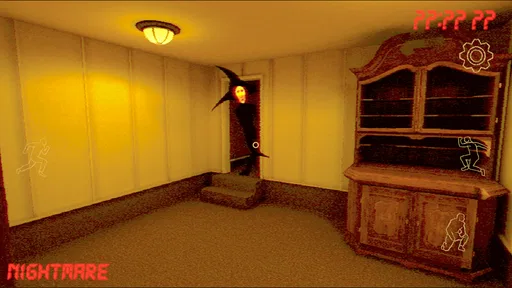
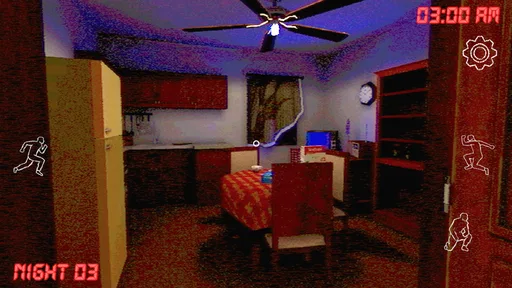
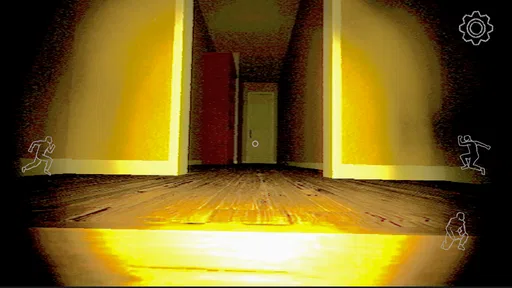
Our Review of Obelisk Analog Horror Game
 Analysis by Appyee
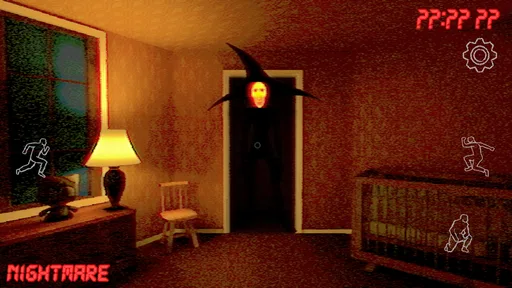
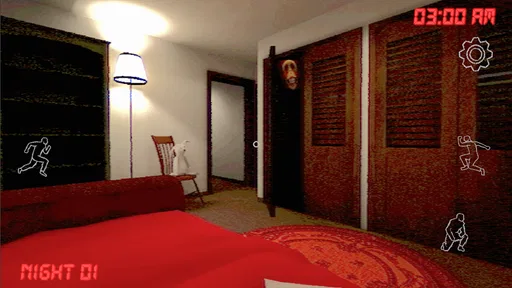
Obelisk Analog Horror Game is the kind of adventure I would suggest to someone who enjoys unsettling atmosphere more than constant action. Its central setup is simple but effective: I am placed in a house with no window and asked to endure five nights while the presence of the Obelisk gradually turns an ordinary-looking space into a source of suspicion. The game comes from CapyCapy Studio, and its VHS-inspired presentation gives the experience a deliberately rough, uncomfortable character rather than a polished blockbuster feel.
What caught my attention is how much the game depends on attention. It is not just about moving forward and waiting for a scare. I found myself studying the room, listening for changes, and questioning whether a detail had always been there. That makes it a good fit for players who like analog horror, confined environments, and short sessions where tension grows through uncertainty. It is less suitable if you want open exploration, combat-heavy adventure, or a relaxed game to play in the background.
Living through the house’s basic rhythm
The most useful way to approach Obelisk is to treat each session as an observation exercise. The house is not a conventional adventure map with a long list of objectives. Its enclosed design makes small changes feel important, so I get better results when I slow down at the beginning instead of rushing around looking for a dramatic event.
My baseline routine is straightforward. I first take in the environment, then revisit familiar areas with a deliberate eye, and finally pay attention to anything that feels inconsistent. That habit matters because analog horror often works through contrast: a space seems stable until one element breaks the pattern. If I sprint through the same route every time, I risk missing the very details that make the game effective.
The five-night structure also encourages a different mindset from a typical adventure game. I do not treat a night as a single puzzle to solve immediately. I treat it as a period for learning the house’s behavior. A first attempt may mainly teach me what deserves attention, while later attempts become more controlled because I know which areas and moments deserve a careful check.
That repeatable workflow is one of the game’s strongest qualities. It gives failure a practical purpose without needing a complicated progression system. When something goes wrong, I can ask whether I ignored a visual clue, moved too quickly, or reacted to the wrong signal. This makes replaying more meaningful than simply starting over and hoping for better luck.
A realistic use case is a late-evening session with headphones and enough time to focus on one night. I would not recommend playing while answering messages or switching between several apps. The game’s tension depends on noticing subtle changes, and interruptions weaken that effect. A short, attentive session is more rewarding than a longer distracted one.
Why the VHS style matters
The VHS analog-horror presentation is not just a decorative filter placed over a normal adventure. It changes how I interpret what I see. Distortion, imperfect image quality, and an old-recording mood make the house feel less trustworthy. I cannot always separate a genuine environmental change from the visual language of the recording, and that uncertainty is exactly where the discomfort comes from.
There is a trade-off, though. Players who prefer crisp graphics may find the presentation deliberately murky or visually tiring. The roughness is part of the artistic goal, but it can also make careful observation harder. I think that is acceptable for the genre, yet it means the game works best when the display is comfortable and the room is not filled with glare.
The Obelisk itself gives the game a recognizable focus. Rather than presenting an anonymous haunted-house scenario, the experience builds its identity around this central presence. I found that more memorable than a collection of unrelated scares because it gives the atmosphere a single idea to orbit around. The result feels more like a contained nightmare than a general-purpose horror sampler.
Settings and preparation worth checking
Before starting seriously, I would check the available in-game settings and adjust anything that affects comfort, visibility, or sound. I am not going to pretend there is a special configuration that transforms the game, but basic preparation can make a big difference in a title built around audio cues and visual attention.
Sound deserves priority. If the game offers separate audio controls, I would keep effects clear enough to distinguish them from background ambience, while lowering the overall level if sudden sounds become uncomfortable. Headphones can improve immersion, but they also make the experience more intense. For players who are sensitive to sharp audio, speakers at a moderate volume may be the better compromise.
Brightness is another practical consideration. Raising it too far can weaken the mood, while leaving it too low may turn deliberate visual ambiguity into simple frustration. I prefer making the smallest adjustment needed to see the environment comfortably. The goal is not to remove darkness; it is to avoid fighting the screen instead of engaging with the game.
Because the game is rated Everyone 10+, families should still consider the individual player’s tolerance for horror. An age label does not make analog horror universally comfortable. The slow tension, disturbing implications, and confined setting may affect younger or more sensitive players differently from someone already familiar with the genre.
On mobile, I would also make sure notifications are minimized before beginning a night. A banner appearing over a tense scene can break concentration and make a restart feel accidental rather than earned. This is a small habit, but it is particularly useful here because the game asks for sustained attention instead of constant tapping.
Faster patterns for repeat attempts
Experienced play in Obelisk is not about moving as quickly as possible. It is about reducing wasted attention. I get better results when I use the same opening routine each time, then reserve my focus for changes. A consistent first pass helps me establish what is normal; after that, deviations become easier to recognize.
I also recommend separating observation from reaction. When something seems wrong, I try not to immediately rush toward it. I pause, look at the surrounding space, and consider whether the disturbance is visual, audible, or simply a result of the VHS presentation. This prevents the common mistake of treating every unsettling impression as an instruction to run.
Another useful pattern is to remember relationships rather than isolated objects. Instead of trying to memorize every detail in the house, I pay attention to where important-looking elements sit in relation to doors, corridors, and other landmarks. That makes later checks faster and reduces the mental load of scanning the entire environment from scratch.
For repeat sessions, I would keep a brief personal note after each attempt. It could be as simple as recording which area felt different, what I noticed before a failure, and whether I was distracted by sound or visibility. This is not an in-game feature; it is a player habit. It turns vague fear into a small process of elimination and is especially helpful when the game’s tension makes memories feel unreliable.
There is also a useful trade-off between curiosity and survival. Exploring every suspicious detail may reveal more of the game’s atmosphere, but it can also expose me to greater risk or waste the limited attention I need elsewhere. If my goal is to finish the five-night challenge, I become more selective. If my goal is to absorb the horror, I accept slower progress and more uncertainty.
Where the design reaches its limits
Obelisk’s narrow setting is both its identity and its main limitation. The house creates focus, but it does not offer the variety of a larger adventure with multiple locations, broad traversal, or a deep inventory system. Players who need constant new scenery may find the repeated environment restrictive rather than suspenseful.
The game also asks the player to accept ambiguity. Not every moment is likely to feel immediately clear, and that can be rewarding when the uncertainty feels intentional. It can be frustrating when I am unsure whether I missed a clue or simply misunderstood the game’s logic. Anyone expecting explicit objectives and generous guidance should approach with patience.
Compared with a standard mobile adventure, this is a more concentrated experience. Traditional adventure games usually reward exploration with collectibles, dialogue, map expansion, or visible upgrades. Obelisk instead rewards careful perception and familiarity with its atmosphere. Compared with a typical jump-scare horror game, it appears more interested in sustained unease than in delivering a new shock every few minutes.
That comparison also explains who should skip it. I would choose another game if I wanted combat, character-building, open-ended wandering, or a strong sense of numerical progression. I would also be cautious about recommending it to someone who dislikes replaying tense sections or interpreting environmental clues without much hand-holding.
Mobile performance and compatibility are practical parts of the decision. The game supports devices running Android 8.1 or later, and the current release is version 1.0.3. I would still check that the phone has enough free space and that its screen and speakers are comfortable for dark, audio-focused play. Those are ordinary precautions, but they matter more here than they would in a bright casual game.
Value, access, and the right audience
The game is free to start, with in-app purchases priced at $2.99 per item. That makes it easy to try the core experience before deciding whether it deserves a place in my regular rotation. I would judge any purchase by whether it adds meaningful enjoyment rather than assuming it is necessary for understanding the basic premise.
Its audience appears substantial for a focused horror adventure: the game has passed 500 thousand installs, with an average rating of 4.5 from around 6 thousand ratings. Those figures suggest that the concept has found a receptive audience, but they do not replace personal taste. Analog horror is unusually dependent on mood, so a player who dislikes degraded visuals may not enjoy it even if many others do.
The release date is February 18, 2026, which is useful context for anyone considering how established the game feels. I would approach it as a focused title whose appeal rests on its specific setting and presentation, not as a massive long-running platform. CapyCapy Studio’s choice to keep the idea centered on the windowless house and the Obelisk gives it a clear personality.
For a friend deciding whether to install it, I would ask three questions. Do you enjoy horror that makes you inspect ordinary spaces? Are you willing to replay sections to learn their patterns? Can you tolerate a deliberately degraded VHS look? If the answer is yes to all three, the game has a good chance of working. If the answer is no to the second or third, the experience may feel more tedious than frightening.
My verdict after learning its habits
The best way to enjoy Obelisk is to play it as a careful observation challenge, not as a race through a haunted house. Once I accepted that, its limitations became easier to understand. The narrow environment is not trying to provide endless adventure; it is building pressure through repetition, suspicion, and small disruptions.
I especially appreciate the way the five-night structure supports gradual mastery. The first attempt is about orientation, later attempts are about recognizing patterns, and the most satisfying progress comes from making fewer careless decisions. That loop will not appeal to everyone, but it gives the game more substance than its compact premise might suggest.
My recommendation is strongest for fans of analog horror games who want atmosphere, restrained exploration, and a memorable central mystery. I would skip it in favor of a broader adventure if I wanted combat or a large world, and I would choose a gentler horror title for someone who dislikes oppressive sound and visual uncertainty.
For the right player, Obelisk Analog Horror Game is a focused free adventure that rewards patience. I would install it, adjust the screen and audio for comfort, silence distractions, and play one night at a time. Its most effective moments come when I stop searching for a conventional answer and start paying attention to what the house is quietly trying to make me doubt.
Verdict
Strengths of Obelisk Analog Horror Game
- Unsettling atmosphere built through distorted visuals and eerie audio.
- Short sessions make it easy to play in small bursts.
- Minimalist controls keep the focus on exploration and tension.
- Surreal environments encourage careful observation and interpretation.
- Works well for fans of cryptic, story-driven horror experiences.
Limitations of Obelisk Analog Horror Game
- Its abstract story may feel confusing without clear explanations.
- Limited interaction can make gameplay seem repetitive over time.
- Frequent unsettling imagery may not suit sensitive players.
- The slow pace may frustrate players expecting action or combat.
- Performance and visual quality may vary across older devices.
Similar Picks in This Category
View All
Roblox
Roblox Corporation4.2

Pokémon GO
Niantic, Inc.3.5

Ninja warrior: legend of adven
TOH Games4.6

Ninja Arashi
Black Panther4.6

Eyes - The Horror Game
Fearless Games sp. j.4.5

Critical Action:Gun Strike Ops
FPS Shooter & Action Game4.3
Frequently Asked Questions
What is Obelisk Analog Horror Game about?
Obelisk Analog Horror Game is a psychological horror experience built around unsettling recordings, mysterious imagery, and a disturbing story that unfolds through an analog-style presentation. Instead of relying only on traditional action gameplay, it creates tension through atmosphere, strange clues, distorted audio, and a growing sense that something is seriously wrong. Players should expect investigation, suspense, and interpretation rather than a straightforward adventure.
Is Obelisk Analog Horror Game suitable for children?
The game is generally better suited to mature players because its horror is based on disturbing themes, eerie visuals, psychological tension, and potentially frightening sound effects. Even if it does not focus entirely on graphic violence, the atmosphere can be intense and uncomfortable, especially for younger users or people sensitive to unsettling imagery. Parents should review the available age rating and content information before allowing children to download it.
Does Obelisk Analog Horror Game require an internet connection?
The connection requirements may depend on the version and platform available through the official store. Some parts of the experience may work offline after installation, while downloading the game, accessing updates, viewing advertisements, or using online features can require internet access. Before starting, it is worth checking the store listing and testing the game with your device in offline mode if you plan to play while traveling.
Is Obelisk Analog Horror Game free to download?
Obelisk Analog Horror Game may be available as a free download, but the exact model can vary between Android and iOS versions. A free installation does not always mean that every feature is included without limitations, since some editions may contain advertisements, optional purchases, or platform-specific restrictions. Always check the official store page for the current price, in-app purchase details, and supported devices before downloading.
What devices are compatible with Obelisk Analog Horror Game?
Compatibility depends on the operating system version, hardware requirements, and the edition published for your device. Most modern Android and iOS phones should be able to run a relatively lightweight analog horror title, but older devices may experience slow loading, audio problems, crashes, or reduced visual quality. Check the official download page for the required Android or iOS version and make sure sufficient storage is available before installation.
Play our best games!


